In the realm of analytical chemistry and materials science, laser – induced breakdown spectroscopy (LIBS) has emerged as a powerful and versatile technique. It offers rapid, multi – elemental analysis with minimal sample preparation, making it suitable for a wide range of applications, from environmental monitoring to industrial quality control. At the heart of many high – performance LIBS systems lies a critical component: the Rowland Circle Grating. As a leading supplier of Rowland Circle Gratings, I am excited to delve into the applications of this remarkable optical element in LIBS. Rowland Circle Grating

Understanding Laser – Induced Breakdown Spectroscopy
Laser – induced breakdown spectroscopy is based on the principle of using a high – energy laser pulse to ablate a small amount of material from a sample surface. The laser energy is sufficient to create a plasma, a highly ionized and excited state of matter. As the plasma cools, the excited atoms and ions emit characteristic wavelengths of light, which are then collected and analyzed to determine the elemental composition of the sample. The key to obtaining accurate and detailed elemental information is the ability to disperse and detect these emitted wavelengths precisely.
The Role of Rowland Circle Gratings in LIBS
Rowland Circle Gratings are optical devices consisting of a large number of parallel grooves engraved on a curved surface. They operate based on the diffraction of light, separating light into its component wavelengths. The unique characteristic of a Rowland Circle Grating is that when it is placed at the perimeter of a circle (known as the Rowland circle), the focal points of all diffracted wavelengths lie on the same circle. This property simplifies the optical design of the spectrometer and enables efficient light collection and wavelength separation.
High – Resolution Wavelength Separation
One of the primary requirements in LIBS is the ability to resolve closely spaced spectral lines. Different elements emit light at specific wavelengths, and in complex samples, these lines can be very close together. A high – quality Rowland Circle Grating can provide excellent spectral resolution, allowing for the accurate identification and quantification of individual elements. For example, in the analysis of alloys, where multiple elements such as iron, nickel, chromium, and manganese may be present, the grating can separate their overlapping spectral lines, enabling precise determination of the alloy’s composition.
Wide Spectral Range Coverage
Another advantage of Rowland Circle Gratings in LIBS is their ability to cover a wide spectral range. LIBS emissions can span from the ultraviolet (UV) to the near – infrared (NIR) regions, and different elements emit characteristic lines in different parts of this spectrum. Our Rowland Circle Gratings can be designed to cover a broad spectral range, ensuring that all relevant elemental emissions can be detected in a single measurement. This is particularly important in comprehensive elemental analysis, where the presence of both light and heavy elements needs to be determined.
High Efficiency
Efficiency is a crucial factor in LIBS, as the amount of light emitted by the plasma is often limited. Our Rowland Circle Gratings are engineered to have high diffraction efficiency, which means that a large proportion of the incident light is diffracted into the desired spectral orders. This results in a stronger signal at the detector, improving the signal – to – noise ratio and the overall sensitivity of the LIBS system. Higher efficiency also allows for shorter measurement times, which is beneficial in applications where rapid analysis is required.
Specific Applications of Rowland Circle Gratings in LIBS
Environmental Monitoring
In environmental monitoring, LIBS with Rowland Circle Gratings can be used to analyze soil, water, and air pollutants. For instance, in soil analysis, it can detect heavy metals such as lead, cadmium, and mercury, which are of great concern due to their toxicity. By accurately measuring the concentration of these elements, environmental scientists can assess the level of soil contamination and develop appropriate remediation strategies. In water quality monitoring, LIBS can detect trace elements and heavy metals in aqueous samples, providing real – time information on water safety.
Metallurgy and Materials Science
In the metallurgical industry, Rowland Circle Gratings in LIBS systems play a vital role in quality control. They can rapidly analyze the composition of metals and alloys during the production process, ensuring that the final products meet the required specifications. For example, in the production of steel, analyzing the carbon, silicon, and sulfur content is crucial for determining the mechanical properties of the steel. LIBS with our Rowland Circle Gratings can provide accurate and immediate results, enabling quick adjustments to the production process if necessary. In materials science research, LIBS with Rowland Circle Gratings can also be used to study the elemental distribution in advanced materials, such as composites and nanomaterials.
Cultural Heritage Preservation
LIBS with Rowland Circle Gratings has also found applications in the field of cultural heritage preservation. It can non – destructively analyze the elemental composition of historical artifacts, such as paintings, sculptures, and ceramics. By identifying the pigments used in paintings or the composition of the clay in ceramics, art historians and conservators can gain insights into the manufacturing techniques and provenance of these artifacts. This information is valuable for conservation efforts, as it helps in determining the most appropriate methods for restoration and preservation.
Why Choose Our Rowland Circle Gratings for LIBS
As a reputable supplier of Rowland Circle Gratings, our products stand out for several reasons. Firstly, we have a team of experienced optical engineers who are dedicated to the design and manufacturing of high – quality gratings. Our manufacturing processes are highly precise, ensuring that each grating meets strict quality standards. Secondly, we offer customized solutions to meet the specific requirements of different LIBS applications. Whether you need a grating with a specific spectral range, resolution, or efficiency, we can design and produce a grating tailored to your needs.
Thirdly, we provide excellent technical support. Our team is available to assist you in choosing the right grating for your LIBS system and can offer advice on installation and optimization. We understand that the success of your LIBS application depends on the performance of the grating, and we are committed to helping you achieve the best results.
Conclusion
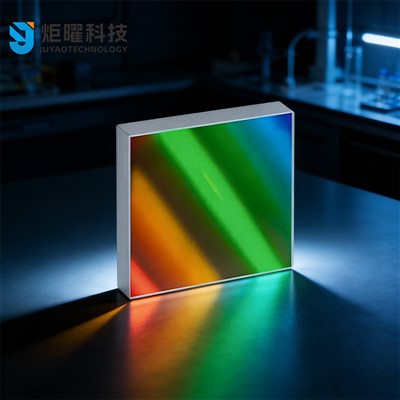
The application of Rowland Circle Gratings in laser – induced breakdown spectroscopy is vast and far – reaching. From environmental monitoring to cultural heritage preservation, these gratings enable accurate and efficient elemental analysis. As a leading supplier of Rowland Circle Gratings, we are proud to offer high – quality products and comprehensive services to support the advancement of LIBS technology.
Seya-Namioka Flat-Field Concave Holographic Grating If you are involved in LIBS research or applications and are looking for a reliable source of Rowland Circle Gratings, we invite you to contact us for further information and to discuss your specific needs. Our team is eager to work with you to find the best grating solutions for your projects.
References
- Cremers, D. A., & Radziemski, L. J. (2006). Laser – Induced Breakdown Spectroscopy (LIBS). Cambridge University Press.
- Sabsabi, M., & Almirall, J. R. (1998). Laser – Induced Breakdown Spectroscopy and its Applications. Marcel Dekker.
- Smith, H. M., & Solimeno, S. (2013). Grating Handbook. Newport Corporation.
Jilin Juyao Technology Co., Ltd.
As one of the leading rowland circle grating manufacturers and suppliers in China, we offer a wide range of products with superior quality. Please feel free to wholesale customized rowland circle grating from our factory. Welcome to view our website for more information.
Address: Room 101, No. 2 Huiwen Road, Nanguan District, Changchun City, Jilin Province, China
E-mail: jyoptix@outlook.com
WebSite: https://www.jyoptix.com/
