Hey there, let’s cut to the chase—if you’re running a welding shop, or even just dabbling in industrial gas work, you know how much a single blip in gas flow can ruin a whole day. A bad weld, wasted gas, or (worse) that annoying pause mid-job that makes your team roll their eyes? 9 times out of 10, it’s not the welder’s fault. It’s the quick coupling. I’ve been in this welding & gas quick couplings game for 7 years now, and I’ve seen more shops shut down early because of a stubborn leaky coupling than I can count. Let’s talk about how to keep gas flowing smooth, no hassle, no surprises. Welding & Gas Quick Couplings
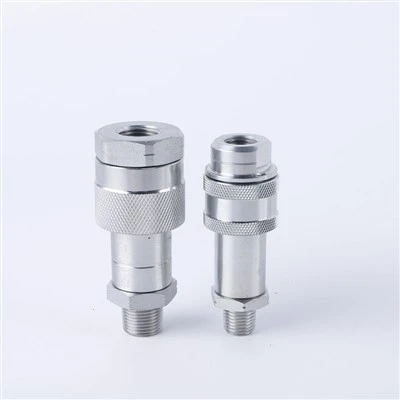
First off, let’s get one thing straight: not all quick couplings are made equal. A lot of guys I meet pick the cheapest option on Alibaba because it’s $2 less per unit, but that’s like buying a $10 tire for a semi-truck. If you’re working with argon, CO2, oxygen, or even acetylene—gases that run under pressure, some super volatile—your coupling can’t just connect. It needs to seal right, engage properly, and not gunk up after 10 uses. I once had a customer, a small fabrication shop in Detroit, call me crying because their new hire burned through 3 full cylinders of argon in a single day. Turned out their cheap couplings had worn O-rings that leaked so bad, they didn’t even notice until the welder’s arc was sputtering so bad, he couldn’t get a clean MIG weld. That’s $150 in gas gone, a ruined metal sheet, and a pissed off foreman—all because they skipped doing a 2-minute pre-use check on their couplings.
Let’s start with the basics: how to make sure your coupling is actually sealing when you connect it. I see this all the time: guys just snap the coupling together once, twist it a little, and call it good. Nah, that’s a lazy move. A proper gas quick coupling (especially for welding) should click audibly when it engages, and you should test it before you even start welding. How? Turn the gas flow on low, give the hose a little tug away from the regulator or torch. If it doesn’t budge, great. If it slips or gas hisses? You didn’t connect it right, or the coupling’s internal parts are worn. Wait, but what if you’re in a rush? I get it—deadlines hate slow work. So here’s a hack I taught every regular customer: when you connect the coupling, push it in until the click, then pull back just a hair. That little extra movement seats the inner check valve right, so you don’t get a half-connection that leaks. I did this last month on a job for a contractor who was installing a steel fence—he was racing to beat the rain, and by just pulling back that tiny bit, he didn’t have to stop mid-job to fix a leak. Saved him like 45 minutes, no lie.
Next up: maintenance, which is way simpler than most guys make it out to be. You don’t need a fancy cleaning kit or a degree in mechanical engineering. What you do need is 5 minutes every Friday (or end of shift) to check your couplings, and to clean them when they get gunked. Welding creates a lot of crud—spatter, metal dust, welding fumes—that gets all over the end of the coupling. That crud is the #1 enemy of smooth gas flow. If there’s a little chunk of spatter in the valve port, it won’t seal right. That means leaks, or even the coupling not connecting all the way. I recommend using a soft wire brush (not a metal one, that can scratch the inner parts and cause leaks) and a lint-free rag. Wipe the outer threads, the inner valve, and the locking mechanism. If you work with heavy spatter, like stick welding or flux-cored, you should do this daily—not just weekly. I had a customer in Chicago that used to skip cleaning their couplings, and they were going through 10 couplings a month. After we started a daily 1-minute clean, they’re going through 2 a month. That’s a huge cost cut for them, right?
Then there’s the big one: checking for wear and tear. Couplings aren’t forever, no matter how good they are. The O-rings inside? Those go bad after 10,000 uses, even if you clean them. The locking springs? Those weaken, so the coupling won’t click right or hold pressure. The inner valves? Those can get stuck open or closed if they get gunked up too long. How do you know when to replace them? Look for these red flags: gas flowing when the coupling is disconnected (that’s a bad check valve), hissing sounds when it’s connected, sputtering arc on your welder, or even frost on the coupling if you’re working with cold gases (that’s a leak, by the way—condensation or escaping gas freezing). A lot of guys wait until the coupling fails mid-weld, which is the worst time to replace it. Replace them on a schedule, not when they break. We usually recommend replacing standard couplings every 12 months for regular use, or every 6 months if you’re running high-volume, 8-hour shifts. It’s way cheaper than dealing with downtime.
Wait, but let’s talk about specific gas types, because that’s a thing. A lot of guys use the same coupling for oxygen and acetylene, and that’s a disaster. Acetylene is way more volatile than argon, so its coupling needs to have reverse flow check valves that are extra tight. Oxygen couplings can’t have any oil on them at all—oil and pure oxygen under pressure? They explode. That’s not an exaggeration. I’ve seen a shop fire because a guy used a coupling that had oil residue from a previous acetylene use on his oxygen line. So make sure you’re matching the coupling to the gas. Don’t grab the MIG welder coupling for your oxygen regulator. It’s not worth the risk.
Another thing a lot of people sleep on: compatibility between your regulator, hose, and coupling. Just because a coupling says it works with MIG welders doesn’t mean it’ll work with your specific Lincoln or Miller welder. Thread sizes vary—like, some MIG torches use 1/4” NPT, some use 3/8”. If the coupling’s thread is the wrong size, it won’t seal. You’ll get leaks, even if you connect it tight. Before you buy a new coupling, pull the old one off and match the thread type, size, and pressure rating. I had a customer a few months back buy a whole pack of couplings, and they were the wrong thread size for his hose. He was so mad, he thought we sold him bad stuff, but when he showed me the old coupling, turns out he just got the wrong size. Always double check that stuff. It takes 10 seconds, saves you hours of headaches.
What about when you’re storing your couplings? A lot of guys just toss them in a toolbox with welding gloves, spatter guns, whatever. That’s a bad move. They can get crushed, or gunked up by leftover welding fumes, or even get scratched by other tools. Store your couplings in a clean, dry spot—maybe a small bin labeled for gas parts, so they don’t get mixed up with your pliers or hammers. If you’re storing them for a long time, put a plastic cap on both ends to keep dust and gunk out. I keep a bin at my shop for customer’s extra couplings, and I always tell them to cap theirs at the end of the day. It’s a tiny thing, but it adds up.
Let’s talk about a common mistake I see: forcing a coupling to connect. If it’s not clicking, don’t yank or push harder. That can break the inner valve, bend the locking pins, or scratch the O-ring. If it’s not connecting, check for gunk in the port, check the thread size, make sure it’s the right coupling for the gas. I’ve had guys come to me with couplings that they forced together, and now they leak so bad, they can’t use them anymore. Forcing a coupling is a fast track to replacement, which you don’t want to do.
Oh, and pressure testing! You should pressure test your gas system (including couplings) every 6 months, minimum. How? Turn off the torch, close the cylinder valve, open the regulator to release pressure, then close the regulator and open the cylinder slowly. If the pressure gauge drops, you’ve got a leak somewhere. It could be the coupling, it could be a hose, but catching it early is way better than having a leak that wastes gas or causes a hazard. I do this every month at my shop, and it’s caught a few small leaks before they became big problems.
Wait, let’s get real here—this isn’t rocket science. A lot of guys make it way more complicated than it is. The whole point of a quick coupling is to make connecting hoses and torches fast, so you don’t have to mess with wrenches every time you switch a cylinder. But if you skip the basic steps—checking connections, cleaning, replacing worn parts—you defeat the whole purpose. You end up wasting gas, dealing with downtime, and even risking safety issues, which nobody wants.
I’ve been in this game long enough to know that every shop, big or small, deals with this. The good news is it’s all preventable. You don’t need to buy the most expensive coupling on the market, but you do need to buy quality, match it to your needs, and take 5 minutes a week to check and clean them. That’s it. No fancy tools, no training, just consistent habits.
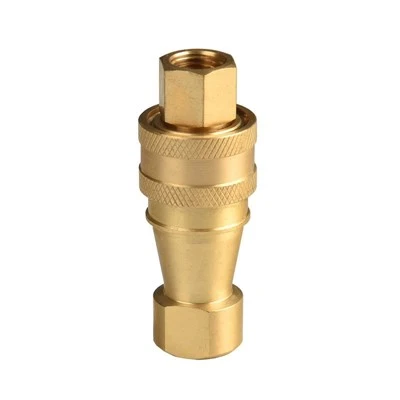
If you’re tired of dealing with sputtering arcs, leaks that waste hundreds of dollars in gas, or downtime that’s killing your profits, I’m here to help. We make welding & gas quick couplings that are built for real shops—they seal tight, hold up to heavy use, and we test every single one before it leaves our warehouse. We also have guys on our team that can help you figure out which couplings work best for your specific setup, no jargon, no pressure. Just reach out when you’re ready to stop dealing with coupling headaches and keep your gas flowing smooth, all the time.
High Pressure Hydraulic Quick Couplings References:
- Welding Handbook, 9th Edition, Volume 2: Welding Processes and Operation, American Welding Society, 2001.
- Compressed Gas Association (CGA) P-1: Safe Handling of Compressed Gases in Containers, 2020.
- "Selection and Maintenance of Quick Disconnect Couplings for Industrial Gas Systems", Industrial Hydraulics & Pneumatics Magazine, Vol. 47, No. 8, August 2019.
- OSHA 1910.253: Welding, Cutting, and Brazing Safety Standards, Occupational Safety and Health Administration, 2022.
- "Common Failures in Welding Gas Delivery Systems and Mitigation Strategies", Journal of Manufacturing Processes, Vol. 58, November 2020, pp. 1124-1132.
Cixi Poolke Hydraulic Pneumatic Co., Ltd.
Cixi Poolke Hydraulic Pneumatic Co., Ltd. is one of the most professional welding & gas quick couplings manufacturers and suppliers in China, also supports customized service. Please feel free to wholesale the newest welding & gas quick couplings made in China here from our factory. Quality products and reasonable price are available.
Address: #88 Zhengtong Road, Kandun Industrial Park315303, Cixi, Zhejiang, China
E-mail: contact@poolke.com
WebSite: https://www.poolkecouplings.com/
