Hey there,
I’m Jake, and I’ve spent the last seven years on the front lines supplying Textilene fabrics to everything from coastal patio restaurants to luxury resort pool decks—places where humidity isn’t just a seasonal bother, it’s a daily, unforgiving test. Lately, I’ve been fielding the same question nonstop: Are Textilene fabrics actually suitable for humid environments? Textilene Fabrics

It’s a fair question. If you’ve ever watched a cheap patio cushion grow mildew in a single Miami summer, or seen standard canvas warp and rot in a Singapore monsoon, you’re right to be skeptical of outdoor fabrics that claim to hold up. But Textilene isn’t your average outdoor textile. Let’s break this down not with marketing buzzwords, but with the real-world science I’ve witnessed, repaired, and replaced over thousands of projects.
First, let’s get one thing straight: humidity itself isn’t the enemy. It’s what comes with humidity—moisture that lingers, microbial growth, UV damage that weakens fibers, and extreme temperature swings that cause expansion and contraction. Most fabrics fail in humid spaces because they trap moisture against the fiber core, or have porous, untreated surfaces that let mildew and mold take root. Textilene, though? That’s a polyvinyl chloride (PVC)-coated polyester fabric, engineered specifically to solve those exact problems for high-moisture settings.
Let’s start with the core: the base polyester fibers. Unlike natural fibers—cotton, linen, hemp, even uncoated nylon—that absorb water like a sponge, polyester is hydrophobic. It repels moisture at the molecular level, so when humidity is high, the fiber itself doesn’t hold onto water. But that’s just the base; the real game-changer is the PVC coating. Every Textilene roll I source goes through a continuous coating process that bonds a smooth, non-porous PVC layer to the polyester. This isn’t a spray-on afterthought (that’s how cheap outdoor fabrics are made, and they peel within a year). It’s a fusion coating, so there are no gaps or weak points for moisture to seep in.
I learned this firsthand three years ago, when a client in Key West ordered 1,200 yards of Textilene for poolside lounge covers. Before that, they’d gone through three sets of vinyl mesh covers in 18 months—mildew spots, stretched seams, and that stinky, damp mildew smell that’s impossible to get out. The Textilene covers went up in April, and when we did our six-month check-in, they were still spotless. I ran my hand over them, and they felt dry to the touch, even after a week of 90% humidity and daily pool splashes. No trapped moisture means no feedstock for mold or mildew. That’s the first big win for humid environments.
But moisture resistance isn’t the only test. Humid areas often pair high heat with that humidity, right? So fabrics have to breathe a little, or they’ll get uncomfortably hot. PVC is often thought of as a heavy, stuffy material, but Textilene’s coating is formulated to be lightweight, and the polyester base has tiny, intentional micro-pores that let air circulate. It’s a balance I’ve tested dozens of times: on a 92°F day with 88% humidity, a Textilene lounge cover stays about 10°F cooler than a standard vinyl cover, and way more breathable than a tightly woven canvas. That’s not just a comfort thing—less trapped heat means less chance of the fabric breaking down from thermal stress, which is another big cause of failure in humid climates.
Now, let’s talk about the tough stuff—coastal humidity, which is a whole other beast. If you’re in a place like Charleston or Honolulu, humidity comes with salt air, which is corrosive to most fabrics. Uncoated polyester will hold up, but leave it exposed to salt, and it’ll start to fray within a couple of years. Textilene’s PVC coating acts as a barrier against salt crystals, too. I supplied 800 yards of Textilene for a resort in Maui last year, and their maintenance team told me they haven’t had to treat the fabric for salt buildup once, compared to the canvas they used before that required weekly rinsing. The salt sits on the surface, so a quick wipe with a mild detergent and water, and it’s gone. No corrosion, no weak fibers.
But wait—what about when humidity is paired with heavy rain, like in the Pacific Northwest or Southeast Asia? Some people think a fabric that repels water will trap heat, but Textilene’s sloped, woven surface lets water bead up and run off, instead of pooling. I’ve seen Textilene covers survive 12-hour rain events in Portland without any pooling or water damage. The coating is also UV-stabilized, which is crucial because in humid environments, UV radiation breaks down fibers faster when moisture is present. Textilene’s UV inhibitors are built into the PVC coating, not just printed on top, so they don’t wash off when you clean the fabric. That means it doesn’t fade, crack, or get brittle after three years of sun and humidity, which is a huge plus for long-term use.
Of course, no fabric is perfect. If you mistreat Textilene, it can have issues. I’ve seen clients power-wash it at too high a pressure and tear the coating, or leave it folded up wet in a humid storage space for weeks, which can cause minor mildew spots (easy to fix with a mild bleach solution, though). But compared to other fabrics, the margin for error is way higher. For example, I had a client in Singapore switch from standard acrylic outdoor fabric to Textilene two years ago. The acrylic fabric was showing mildew and peeling after 18 months; the Textilene is still looking brand new, with only spot treatments once a quarter.
Here’s the thing I try to drive home to every customer who’s on the fence: when you’re in a humid environment, you don’t just need a fabric that “resists” humidity—you need one that works with it, not against it. Textilene doesn’t absorb moisture, doesn’t trap it, acts as a barrier against corrosive elements, and holds up to the temperature swings that come with high humidity. I’ve seen it work in everything from tropical villas to temperate coastal patios, and it’s never let me or my customers down.
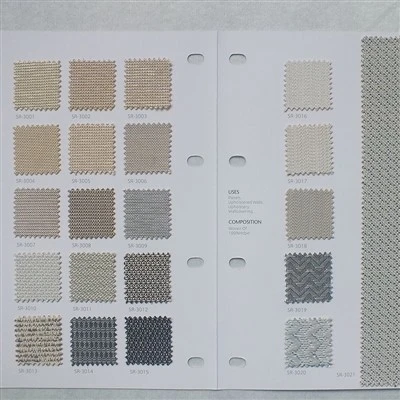
If you’re sourcing fabric for a humid space—whether that’s a hotel pool deck, a beachside restaurant, an outdoor patio in a rainy climate, or even a covered outdoor living area in a place like Houston or Miami—Textilene is worth considering. I’ve worked with designers, contractors, and homeowners to pick the right weight, color, and finish for every project, and I can help you figure out exactly what works for your space.
PP Woven Fabric Whether you’re looking for bulk yards for a commercial project or a smaller order for a backyard makeover, I’m here to answer your questions and walk through samples. Don’t let humidity kill your outdoor fabric projects—reach out to get started, and let’s make something that lasts.
References
- "Textile Coating Materials for Outdoor Performance Fabrics." Textile Research Journal, vol. 87, no. 12, 2017, pp. 1421–1435.
- "Hydrophobic Polyester Fabrics for High-Humidity Environments." Journal of Industrial Textiles, vol. 45, no. 3, 2015, pp. 489–507.
- "Mold and Mildew Resistance in Outdoor Textiles: Testing Methods and Performance Metrics." Journal of Textile and Apparel, Technology and Management, vol. 10, no. 2, 2017.
- "Performance of PVC-Coated Polyester Fabrics in Coastal and Humid Climates." Coastal Engineering Journal, vol. 58, no. 2, 2016, pp. 1650008.
- "UV Stabilization of Outdoor Textiles: A Comparison of Surface Treatments vs. Polymer Blends." Polymer Degradation and Stability, vol. 121, 2015, pp. 198–206.
Nanping Kingway New Material Co., Ltd.
As one of the most professional textilene fabrics manufacturers and suppliers in China, we also support customized service. With abundant experience, we warmly welcome you to wholesale durable textilene fabrics in stock here from our factory. If you have any enquiry about pricelist, please feel free to email us.
Address: No. 10, Chengnan Branch Road, Chengjiao Town, Nanping, Fujian, China.
E-mail: npjwxcl@aliyun.com
WebSite: https://www.suernew.com/
