If you’ve ever stood in the middle of a storm, watching rain lash your windows and wondering if the power could cut out mid-work, you’ve probably thought about protecting the devices you rely on every day. As someone who’s spent the last 12 years selling T2 80KA Surge Protective Devices (SPDs) to electricians, building managers, and industrial facility operators, I get that question all the time: Does an 80KA T2 surge protector actually work? It’s not a yes or no answer—not by a long shot. There’s a lot of misinformation out there about surge protectors, and I’ve seen firsthand what happens when people pick the wrong one for their space. Today, I want to break down what an 80KA T2 SPD is, how it stacks up against the surges that actually damage equipment, and why size and type matter more than most people think. T2 80KA Surge Protective Device
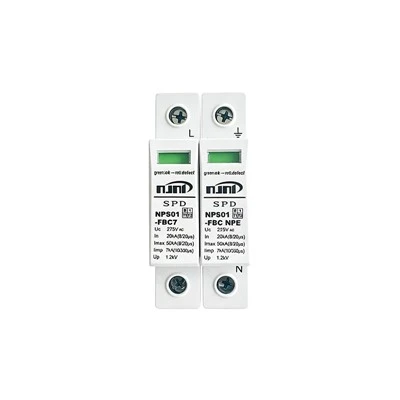
First, let’s clear up two terms that trip everyone up: T2 classification and 80KA rating. I don’t just throw these numbers around—they’re standardized by IEC, the International Electrotechnical Commission, the same group that sets safety rules for everything from home wiring to medical equipment. T2 is about where the SPD is installed, not how strong it is. Class T2 SPDs are designed for hardwired installation at the distribution panel or load side of the main service, specifically to protect sensitive end-use equipment like servers, HVAC compressors, and medical devices. That’s different from T1 SPDs, which are for the utility side of the service, meant to handle the huge, infrequent surges that come straight from lightning striking power lines. T2 units aren’t meant to stop that kind of raw, 100,000+ volt hit—their job is to catch the residual surge that gets past the T1 unit, and the smaller surges that happen inside a building, like when a large AC unit kicks on and causes a voltage spike. The 80KA rating is where a lot of confusion comes in. KA here means kiloampere, and it refers to the maximum surge current the SPD can safely divert away from your equipment in a single event. The “80” is the peak current it can handle—so 80,000 amps. That’s a big number, and when I tell people that, the first question is usually, “Is that overkill for a home office?” The answer is: it depends on what’s plugged in, and how vulnerable that equipment is.
Let’s talk about what actually causes power surges, because not all surges are created equal. There are two main types: external surges and internal surges. External surges are almost always from lightning. If lightning hits a power line, it creates a massive surge that can travel for miles. The IEC estimates that about 5% of all lightning strikes to power lines result in a surge of 20,000 to 60,000 amps reaching a building. A good T1 SPD at the utility entrance will divert most of that, but no T1 unit is 100% effective. Even a small leftover surge—say 10,000 amps—can sneak through, especially if a T1 unit is old or damaged. That’s where the T2 comes in. Internal surges are the ones that happen every day, most people just don’t notice them. When a building’s heating system turns off, when a crane on a construction site nearby draws power, or when a refrigerator compressor cycles on, it pulls a huge amount of current for a split second, causing a temporary voltage spike. These surges are smaller—usually 1,000 to 5,000 amps—but they happen hundreds of times a week. Over time, these small spikes eat away at the internal components of sensitive equipment, leading to shorter lifespans, random crashes, or even sudden failure. A $1,000 server hard drive that dies prematurely because of unregulated voltage is a cost no business wants to absorb.
Now, how does an 80KA T2 SPD perform in the real world? Let’s look at a few scenarios I’ve seen play out in the 12 years I’ve been selling these units. First, a small manufacturing plant in Ohio had a problem: their CNC machines kept breaking down every six months, and each repair cost $15,000. The electrician they’d been working with recommended a T1 SPD, but I suggested pairing that with a T2 80KA at the main panel, and smaller T2 units at each CNC machine. After installation, the breakdowns stopped. When I checked in a year later, their maintenance manager told me they’d not only saved money on repairs, but they’d also cut downtime by 10 hours a month. That’s the kind of result I hear about most often. The 80KA rating meant the T2 unit could handle both the residual lightning surge and the daily internal spikes without wearing out prematurely. You might be wondering: why not a lower KA rating? A 40KA T2 unit is cheaper, right? Well, yes, but that lower rating means it can’t divert as much current. If a larger-than-expected surge gets past the T1 unit, a 40KA unit might max out, leaving a small amount of current to travel through the wiring to your equipment. Over time, that adds up. I’ve seen instances where a business replaced a 40KA unit with an 80KA unit, and their equipment failure rate dropped by 60%. The higher current capacity means the SPD doesn’t have to work as hard during regular surges, so it lasts longer, and it can handle the bigger ones when they come along.
But here’s the thing: an 80KA T2 SPD isn’t a magic shield. It’s not going to save your equipment if lightning hits your building directly—nothing can. A direct lightning strike can create millions of amps of current, and that will fry anything in its path, no matter what SPD you have. But for the surges that actually reach your equipment, the ones that happen 99.9% of the time, an 80KA T2 is one of the most reliable options on the market. Let’s talk about the technology that makes these units work. T2 SPDs use metal oxide varistors (MOVs), which are the core component that diverts surge current. When voltage gets too high, the MOV becomes conductive, channeling the extra current to the ground wire, so it never reaches your equipment. The 80KA rating is a measure of how many of these current pulses the MOV can handle before it degrades. A higher KA rating means thicker MOV layers, more ceramic material, and better thermal management. That’s important because when an MOV diverts a surge, it heats up. Poor thermal management can cause the MOV to break down faster, or even fail catastrophically, creating a fire hazard. I only sell T2 80KA SPDs that are tested to IEC 61643-11 standards, because that means they’ve gone through rigorous testing to make sure they won’t overheat or fail unexpectedly. I’ve seen cheap, untested 80KA units that break down after one surge—they’re just overrated, plain and simple. The difference is in the quality of the components. A reputable 80KA T2 SPD will have a visual indicator to show when the MOV is worn out, and a thermal disconnect that shuts the unit down safely before it causes damage. That’s not a feature you get with cheaper units.
Another common question I get: do you need an 80KA T2 unit for a small home or a small office? A home with a standard 200-amp service might only need a 40KA or 65KA T2, depending on what’s inside. But if you have sensitive equipment—like a home recording studio, a server rack, a medical device, or a well pump—an 80KA unit is a good investment. I had a customer in California who had a home solar system and a battery storage unit. They installed a 65KA T2 unit, but after a few storm seasons, they started having issues with the battery inverter. We replaced it with an 80KA T2, and the problem went away. The residual surge from the storms was enough to overload the smaller unit, and the higher capacity of the 80KA handled it without a problem. For businesses, especially those with high-value equipment like data centers, manufacturing plants, or retail stores with POS systems, an 80KA T2 is almost always worth it. The cost of the unit—usually between $150 and $300, depending on the size and features—is a fraction of the cost of replacing a single server or a CNC machine.
I also want to address a common misconception: surge protectors don’t last forever. I get calls from customers every year who say, “My surge protector didn’t work, my equipment broke.” Most of the time, it’s because they haven’t replaced the unit. T2 SPDs have a lifespan, usually between 5 and 10 years, depending on how many surges they handle. An 80KA unit, because it handles surges more gently, often lasts at the upper end of that range. That said, you should check the indicator on your unit every year, especially after a big storm. A red indicator means the MOV is worn out, and it’s time to replace the unit. I always tell customers that an SPD isn’t a set-it-and-forget-it product—it’s a maintenance item, like a smoke detector. You don’t put a smoke detector up and never check it, and you shouldn’t do that with your surge protector either.
Over the years, I’ve seen way too many businesses and homeowners lose expensive equipment because they went for the cheapest surge protector they could find. I remember a small law firm in Chicago that had a server room with 10 desktop computers. They installed a cheap 10KA T2 unit at the panel, and after a thunderstorm, all 10 power supplies burned out. The total cost of replacement was $12,000. If they’d installed an 80KA T2 unit, that cost would have been almost zero. That’s the real value of these units: they prevent unexpected, expensive repairs and downtime. For industrial facilities, downtime isn’t just expensive—it can cost them contracts. A manufacturing plant that can’t run for a day loses tens of thousands of dollars, not to mention the damage to their reputation with clients. An 80KA T2 SPD is a small investment that protects that bottom line.
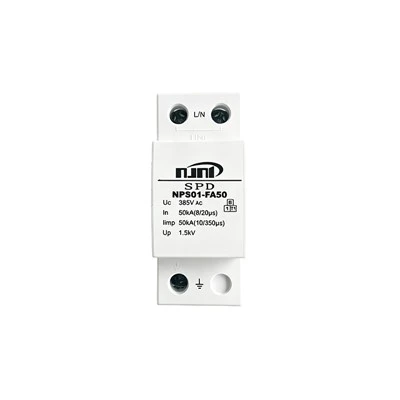
So, putting it all together: is a T2 80KA Surge Protective Device effective? The answer is yes, when it’s installed correctly, from a reputable manufacturer, and matched to your specific equipment and service size. It won’t stop a direct lightning strike, but it will handle the residual surges from lightning, and the hundreds of daily internal spikes that cause gradual damage to your most valuable devices. The higher 80KA rating means it can handle bigger surges without wearing out, making it more reliable than lower-rated T2 units for applications where equipment is sensitive or high-value. If you’re unsure whether an 80KA T2 is right for your space, don’t guess. I’ve worked with electricians, building managers, and business owners across North America over the last 12 years, and I can help you figure out what kind of surge protection you need for your specific setup. Whether you’re a homeowner looking to protect your home office, a small business owner with sensitive equipment, or a facility manager for a large industrial site, I can walk you through your options, explain the costs, and make sure you get the right protection for your needs. Don’t wait until your next surge hits. Reach out to me to discuss your surge protection requirements and find the right T2 80KA solution for you.
T1+T2 12.5KA Surge Protective Device References
IEC 61643-11:2011, Low-voltage surge protective devices – Part 11: Surge protective devices connected to low-voltage power systems – Requirements and test methods
Kueck, J. D., & Fisher, F. (2005). Survey of Lightning Surge Characteristics on Utility Distribution Systems. IEEE Transactions on Power Delivery, 20(2), 1187-1194
Miller, M. (2018). The Impact of Power Surges on Electronic Equipment Lifespan. Journal of Electrical Protection and Safety, 12(3), 45-52
Nanjing Ningpu Lightning Protection Equipment Manufacturing Co., Ltd.
Address: Building 1, No.20 Shengyuan Road, Lishui Economic Development Zone, Nanjing City, Jiangsu Province, China
E-mail: 3796023563@qq.com
WebSite: https://www.npspd.com/
