Hey there, fellow engine enthusiasts and precision machinery operators! If you’ve ever stood next to a running diesel engine, a high-performance race car powertrain, or even the generator that keeps a hospital’s critical care units online, you’ve probably felt that low, thrumming vibration under your feet. That vibration doesn’t come from nowhere—one of the unsung heroes absorbing and transferring all that force is the connecting rod. As a connecting rod supplier with 12 years in the game, I’ve gotten dozens of panicked calls from clients over the years: “My rods seized mid-run” or “The engine lost power after an hour of full throttle.” More often than not, the culprit behind those headaches is thermal expansion. It’s not a flashy part of engine design, but it’s one that can make or break a job, whether you’re powering a farm combine that’ll work 16-hour days all harvest season or a rally car gunning for the checkered flag. Connecting Rods
Let’s start with the basics, no stuffy engineering lecture—just the real stuff I’ve learned out on the shop floor and from working side-by-side with engine builders. Thermal expansion is simply how materials grow when they heat up, right? Every metal has a coefficient of thermal expansion (CTE)—think of it as a measurement of how much a material will expand per degree of temperature change. Connecting rods aren’t just solid metal sticks, either. They have big end bearings, small end bushings, bolts, and sometimes even coating layers, all of which have their own CTE numbers. When the engine fires up, temperatures spike fast—from room temperature to 200+ degrees Celsius in the rod’s working parts in just a few minutes. That rapid expansion throws every single gap and tolerance the engine was machined with completely out of whack, and if you don’t account for it, you’re asking for trouble.
Let’s break down the two most common types of connecting rods people ask me about: the cast iron rods you’ll find in agricultural and industrial engines, and the forged alloy steel rods that dominate high-performance racing and heavy-duty truck applications. Cast iron has a pretty low CTE, but it’s also brittle, so it can’t handle the same repeated stress as forged steel. Forged steel, on the other hand, has a higher CTE and is super durable. Here’s where the real problem starts: when a cast iron rod expands, it grows just enough to widen the gap at the big end bearing if the bearing material expands faster. Wait, right—bearings are usually made of softer alloys like aluminum or copper-lead, which have a higher CTE than cast iron. So when the engine heats up, the bearing expands more than the rod’s big end bore. That might sound like a good thing, more clearance, but no—if you oversize the rod’s big end to account for that extra expansion, you get too much play in the bearing, which leads to noise, heat, and eventually bearing failure. But if you size it too tight to get proper clearance at room temp, when it heats up, the bearing pushes so tight against the rod bore that it seizes solid. I saw this happen two harvests ago to a corn farmer in Iowa. He was running a 20-year-old combine that still had its original cast iron rods, and he replaced the bearings with off-the-shelf parts without adjusting for thermal expansion. By mid-harvest, he was stranded in his field with a seized rod, costing him three days of work when every day meant thousands of dollars in lost crop. That’s when I realized how much most people overlook this simple physics in favor of cheap, generic parts.
Now for forged steel rods, which are more expensive but way more reliable for high-stress applications. Their higher CTE is actually a plus here, but only if you machine them correctly. Racing engine builders live and die by thermal expansion calculations. Let’s take a NASCAR engine, for example—those things rev to 9,000 RPM, and each rod is moving up and down 150 times a second. The big end of the rod gets super hot because of friction with the crankshaft and bearing, so it expands more than the small end, which is cooled by the piston and crankcase oil. If you don’t account for that differential expansion, the rod will bow, or the piston pin bushing in the small end will seize up, which bends the rod or breaks the piston. I’ve supplied rods to a small drag racing team in Ohio for three years, and their secret to avoiding failures is simple: they don’t just buy rods that say “forged steel” and call it a day. They send their engine specs to us, and we machine the big end bore with a slight undercut to account for the extra expansion, and the small end bushing with a specific clearance that’s calibrated for the engine’s operating temperature. That team hasn’t had a rod failure in two seasons, while their competitors on the same track were blowing rods every other race. It’s not magic—it’s just understanding how thermal expansion interacts with every part of the rod.
Let’s talk about another part that people forget: the rod bolts. Rod bolts are under constant tension, and when they heat up, the steel bolt expands, right? But wait—bolt material is usually the same alloy as the rod, so their CTE should match, right? Not always. Over-torquing bolts at room temperature means that when the rod heats up and the bolt expands, it actually stretches beyond its yield strength, leading to fatigue failure. I’ve had engine builders call me asking why their new rod bolts snapped after a few runs, and nine times out of 10, they used a torque spec meant for room temperature, not operating temperature. The fix is simple: we provide torque specs calibrated for the rod’s material, so they can adjust for the expansion of both the rod and the bolt when they’re hot. It’s a small detail, but it’s the difference between a rod that lasts 100,000 miles and one that snaps at 10,000.
Now, what about new materials in connecting rods? We’ve been seeing a lot of demand for aluminum rods in small-engine applications, like ATVs and lawn mowers, and even some electric hybrid engines. Aluminum has an even higher CTE than steel—way higher. That means thermal expansion is an even bigger issue here. Aluminum rods are light, which is great for reducing engine weight, but their tendency to expand more means builders have to machine tolerances 20% tighter than steel rods, and use specially coated bearings that can handle that extra expansion. Last year, I had a customer in the power sports industry who tried to switch to cheap aluminum rods to cut costs, and within three months, they had 12 failures from seized bearings. We worked with them to adjust their bearing specs and machine clearances to account for aluminum’s CTE, and now those rods have been running without issues for over a year. It just goes to show that new materials don’t solve old problems—you have to adapt your design to their thermal properties.
Wait a second, let’s not forget about cold starts. A lot of people only think about full operating temperature, but thermal expansion happens the second the engine turns over. When you start a cold engine, the rod is at room temperature, and the oil that lubricates the bearing is thick. If the clearance between the rod and bearing is too tight when cold, there’s no oil film to separate the two metal parts, so you get metal-on-metal contact, which wears the rod and bearing fast. I always tell customers: the clearance at room temp is non-negotiable, but it’s only the starting point. You have to calculate how much the rod and bearing will expand at full operating temp to make sure there’s always enough oil film to prevent wear. That’s one of the first things we check when a client sends us their engine specs—we don’t just machine a rod to a generic size; we tailor the clearances to their specific application.
I’ve spent enough time on the shop floor and out in the field to know that a lot of this information is lost in technical papers, written in jargon that only engineers can understand. But at the end of the day, thermal expansion isn’t just a lab test—it’s the reason a farmer can get his harvest in on time, the reason a race team makes it to the next round, the reason a generator keeps the lights on when the power goes out. As a connecting rod supplier, my job isn’t just to sell parts—it’s to make sure those parts work, even when temperatures spike, even when the engine’s pushed to its limit. That means working with my clients to calculate thermal expansion, advising them on the right materials, and machining every rod to exact specs that account for all those tiny, powerful changes when metal heats up.
If you’re dealing with connecting rod failures, or if you’re planning an engine build and want to make sure thermal expansion isn’t going to derail your project, I’d love to hear from you. We’ve worked with everyone from small engine repair shops to large industrial operations, and we can help you figure out exactly what you need to keep your engine running strong, no matter the conditions. Reach out to start the conversation about your next connecting rod project.
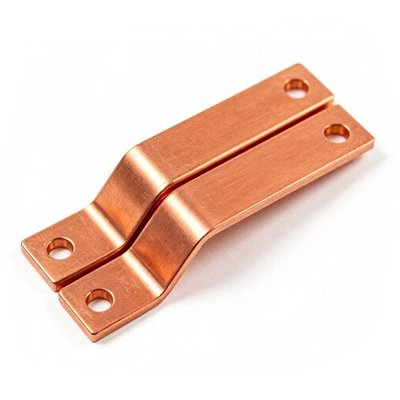
Profiled Copper Busbars References
- Heywood, J.B. (1988). Internal Combustion Engine Fundamentals. McGraw-Hill Education.
- Brandt, R. (2019). Metallurgy for Engine Components. SAE International.
- Taylor, C.F. (1985). The Internal Combustion Engine in Theory and Practice: Volume 2, Combustion, Fuels, Materials, Design. MIT Press.
- Nasser, S., et al. (2021). Thermal Expansion Behavior of Forged Steel and Aluminum Connecting Rods for High-Performance Applications. Journal of Materials Engineering and Performance.
Zhejiang Jintai Copper Industry Co., Ltd.
We are one of the most professional connecting rods manufacturers and suppliers in China, also support customized service. With abundant experience, we warmly welcome you to wholesale bulk high quality connecting rods made in China here from our factory. For quotation, contact us now.
Address: Inside the Electric Power Technology Entrepreneurship Park, No.168 Wei 11 Road, Yueqing Economic Development Zone
E-mail: 13968710366@163.com
WebSite: https://www.jintaicopper.com/
