When I first started working as a biomass pellet mill supplier over a decade ago, I used to get a lot of questions that left me scratching my head. One of the most common was: “What’s the shredding capacity of a biomass pellet mill if it has a shredding function?” Back then, I’d explain it in the simplest terms possible, but over the years, I’ve realized many people still don’t fully grasp how that shredding feature works, why it matters, and how to figure out the right capacity for their operation. Today, I want to break this down like I would when sitting across from a customer in my workshop—no overly technical jargon, just clear, practical info that’s actually useful. Biomass Pellet Mill

First, let’s get on the same page: a biomass pellet mill with a shredding function isn’t two separate machines stuck together. It’s a single unit designed to handle the first step of biomass processing: turning raw materials like wood chips, agricultural residues, or even yard waste into a consistent, uniform size before it goes into the pelletizing chamber. If the shredding capacity isn’t matched to what you’re actually processing, you’re going to run into headaches—like uneven feed, clogged dies, low pellet quality, or even unnecessary wear and tear on your machine.
Let’s start with what shredding capacity actually means in this context. For a biomass pellet mill, shredding capacity refers to the maximum volume or weight of raw biomass material the built-in shredder can process per hour, while still producing material small and uniform enough to feed into the pellet mill. But here’s the thing: it’s not a one-size-fits-all number. A shredder that works great for pine wood chips won’t perform the same way on thick corn stalks, and that’s where a lot of buyers go wrong. They see a “2-ton per hour” rating and assume that’s all they need, but it depends entirely on the material.
Take wood, for example. Hardwood like oak is dense and tough, so a built-in shredder has to work much harder to break it down. Its shredding capacity might be lower—say, 1.5 tons per hour—when processing hardwood, but jump to softwood like pine, and that number can go up to 2.5 tons per hour. Now agricultural residues: corn stalks are fibrous and stringy, so they require a different kind of shredding action, and the capacity here might sit around 2 tons per hour, while wheat straw, which is lighter and more brittle, could hit 3 tons per hour. Yard waste, which is a mix of grass, leaves, and small branches, might have a capacity of 2.8 tons per hour, but only if the material isn’t wet.
Wait, moisture content is a huge factor I can’t skip over. If your raw biomass is too wet—over 15% moisture, to be roughly accurate—the shredder blades have to work harder to cut through the soggy material, which drags down capacity. I’ve seen customers bring in wood chips that were rained on, and their shredding capacity dropped by almost 40% because the wet material clogs the blades and makes the motor strain. On the flip side, if the material is too dry, it’s more prone to turning into dust, which can also reduce efficiency because the shredder isn’t processing solid chunks, just small particles that slip through.
Another thing that affects shredding capacity is the type of shredding mechanism in the pellet mill. Most of our models use either a hammer mill shredder or a knife shredder. Hammer mill shredders have swinging hammers that beat the material into small pieces; they’re great for dense, hard materials like hardwood or even small logs, but they tend to wear out faster. Knife shredders use sharp blades that slice through material, similar to how a knife cuts food, so they’re better for fibrous materials like straw or corn stalks, and they maintain their capacity longer because the blades are easier to sharpen. If you’re processing a mix of materials, some of our customers prefer a model with both, which gives you more flexibility to adjust capacity based on what you’re running that day.
Now, why does this shredding capacity matter so much? Let’s tie it back to the pelletizing process. If your shredder can’t keep up with the pellet mill’s needs, you’ll have a backlog of unprocessed material, and your production line will slow down. Say your pellet mill has a 2-ton per hour pelletizing capacity, but your shredder only does 1.5 tons per hour on your main material. You’re going to spend half your time waiting for the shredder to catch up, which cuts your overall productivity. On the other hand, if your shredder has a much higher capacity than your pellet mill, you’re wasting money on a machine that’s doing more work than it needs to. It’s like buying a truck with a 10-ton hauling capacity when you only need to move 5 tons a day—you’re paying for extra capacity you’ll never use.
I always tell customers to do two things first before even looking at shredding capacity: figure out what their main raw material is, and their desired pellet production rate. Let’s say a customer runs a small farm that mostly processes wheat straw, and they want to produce 1.5 tons of pellets per hour. For wheat straw, a knife shredder with a shredding capacity of 1.8 tons per hour would be perfect. That extra 0.3 tons is a buffer, so if there’s a small blockage or the blades need a quick sharpening, the line doesn’t stop entirely. If another customer is a wood processing shop that works with oak, and they want 3 tons of pellets per hour, they’ll need a hammer mill shredder with a shredding capacity of at least 3.5 tons per hour to handle the dense hardwood and keep up with their pellet mill.
I’ve seen too many customers make the mistake of prioritizing high shredding capacity at all costs, only to end up with a machine that’s too heavy for their small operation. Last year, a customer from a small woodworking shop bought a biomass pellet mill with a 5-ton per hour shredding capacity, but their actual pellet production only needed 2 tons per hour. They told me later that the machine was too big for their workshop, used way more electricity than they needed, and the extra power made their operational costs jump by 25% annually. That’s why I emphasize matching shredding capacity to your specific needs, not just the largest number you can find.
Another point: uniformity of the shredded material. Shredding capacity isn’t just about how much you process per hour—it’s about how consistent the final size is. If your shredder produces a lot of oversized pieces, those will clog the pellet mill’s die, cause uneven pellet density, and even break the die itself. I’ve had customers who bought a cheap pellet mill with a shredding function that only advertised a high capacity, but the shredded material was all different sizes. Their pellet quality was so poor that they couldn’t sell the pellets, and they ended up having to replace the dies every three months, which cost them more than the machine itself. So when you’re looking at shredding capacity, make sure it’s paired with the ability to produce a consistent particle size—usually 3 to 8 millimeters, depending on the pellet mill’s die size.
What about maintenance? How does that play into shredding capacity? If you don’t clean and sharpen the shredder blades regularly, the capacity will drop over time. Blunt blades can’t cut through material as efficiently, so you’ll get less output per hour. We recommend sharpening the shredder blades every 50 to 100 hours of operation, depending on the material you’re processing. For hardwood, you might need to sharpen them every 50 hours, while for straw, it can be every 100 hours. Also, replacing worn hammers (if you have a hammer mill) is important—worn hammers don’t strike with enough force, so shredding capacity decreases. Our machines are designed with easy access to the shredder chamber, so you can perform maintenance quickly without needing to call a technician, which helps keep your capacity consistent.
Let’s talk about real-world examples to make this concrete. Last quarter, we helped a customer in Iowa who runs a farm with 500 acres of corn. They wanted to process their corn stalks into animal bedding pellets. Their desired pellet production was 2 tons per hour. After discussing their material, we recommended our model with a knife shredder, which has a shredding capacity of 2.5 tons per hour for corn stalks. They told us after three months of use that this was exactly what they needed. The shredder handled the fibrous corn stalks easily, kept up with the pellet mill, and they didn’t have any clogged dies or slowdowns. They even mentioned that they could process a bit more if they worked extra, which was a nice bonus.
Another example: a small wood chip producer in Oregon. They process a mix of softwood and hardwood, and they want 3 tons of pellets per hour. We recommended a model with a combined hammer-knife shredder, which has a shredding capacity of 3.8 tons per hour for softwood and 2.8 tons per hour for hardwood. This gave them the flexibility to switch between materials without having to adjust the capacity too much, and they’ve been happy with the pellet quality because the shredded material is uniform.
Now, I know some of you might be thinking, “What if I process multiple materials—some hard, some fibrous?” The key here is to pick a shredding capacity that works for your toughest material. If your main material is hardwood, even if you sometimes process straw, make sure the shredding capacity is rated for hardwood, because that’s the one that will limit your overall production. We always label our machines with shredding capacity by material, so you don’t have to guess—you can look at the specification sheet and see exactly what it can handle for your specific raw material.
I also want to address a common misconception: a pellet mill with a shredding function is as good as a standalone shredder. That’s not true. Standalone shredders are built for heavy-duty, high-volume processing, while built-in shredders on pellet mills are designed to complement the pelletizing process. Their shredding capacity is optimized to work with the pellet mill’s feed rate, so you don’t have to transfer material between two machines, which saves time and reduces labor. If you’re running a small to medium operation, a pellet mill with a built-in shredder is usually more cost-effective than buying two separate machines. For large-scale operations, though, a standalone shredder paired with a separate pellet mill might be better, as it gives you more control over the shredding process.
When you’re evaluating a biomass pellet mill’s shredding capacity, ask yourself a few questions: What’s my main raw material? What’s my desired pellet production per hour? How much space do I have for the machine? What’s my budget? If you can answer those, you can narrow down the right shredding capacity. If you’re still not sure, don’t hesitate to reach out—we work with customers every day to match them with the right machine, and we don’t push models that are too big or too small for their needs.
At the end of the day, the shredding capacity of a biomass pellet mill with a shredding function is all about balance. It’s not about having the highest number on the spec sheet—it’s about having a shredder that can keep up with your production needs, produce uniform material, and fit your operation. Too small, and you’re wasting time and money on slow production. Too big, and you’re paying for extra capacity you’ll never use.
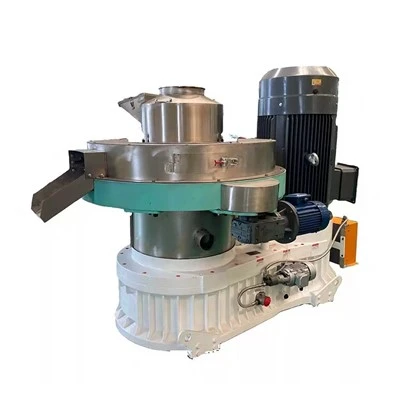
If you’re in the market for a biomass pellet mill and want to figure out the right shredding capacity for your business, we’re here to help. We can walk you through the different models, explain how their shredding capacity works with different materials, and answer any questions you have about maintenance or operation. Don’t guess—get the right machine the first time, so you can focus on producing high-quality pellets and growing your business.
Grass Chopper References
- Biomas Processing and Pelletizing Handbook, International Energy Agency, 2021.
- “Shredding Capacity Optimization for Biomass Pellet Mills,” Journal of Agricultural Engineering Research, Vol. 45, No. 2, 2020.
- Maintenance Guidelines for Industrial Biomass Shredders, American Society of Agricultural and Biological Engineers, 2019.
- “Material-Specific Shredding Performance in Biomass Processing,” Bioresource Technology Reports, Vol. 7, 2020.
Zhengzhou Xinyihaotong Machinery Manufacturing Co., Ltd.
As one of the most professional biomass pellet mill manufacturers in China, we also support custom service. We warmly welcome you to buy high quality biomass pellet mill for sale here from our factory. For price consultation, contact us.
Address: Rooms 2301–2312, Jiayi Building, Xinxiang City, Henan Province, China
E-mail: zhaoyixuan5566@gmail.com
WebSite: https://www.xyhtmachinery.com/
