When I first started working in the transfer and tandem die supply space 12 years ago, I would get a lot of questions from prospective clients—mostly from small to mid-sized stamping shops, and even some automotive component manufacturers—who’d say something like, “I can just use a standard die, right? Why invest in transfer or tandem dies?” Back then, I’d explain the basic cost savings or speed benefits, but over the years, the conversation has shifted. Now, the top question is almost always about product quality. That makes sense, because quality isn’t just a box to check anymore—it’s what keeps parts fitting right, meeting regulatory standards, and customers coming back. Today, I want to break down how transfer dies and tandem dies directly contribute to better product quality, from the first blank sheet of metal to the finished, stamped part that rolls off the line. Transfer Dies & Tandem Dies
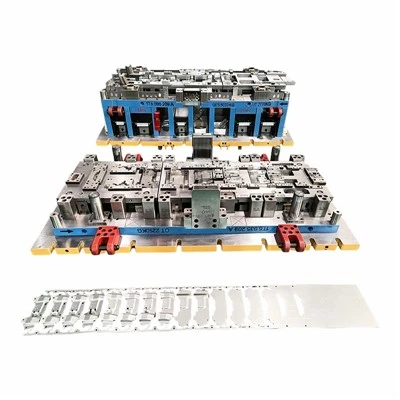
Let’s start with what these dies are, because it’s easy to mix them up. A transfer die uses a series of die stations all in one big, single set, with robotic or mechanical transfer arms that move the part (or the blank metal) from one station to the next automatically—no manual handling, no stopping the line to reload. A tandem die, on the other hand, is a line of separate, smaller die sets, each doing a single stamping operation, all linked by a conveyor system that moves parts between them. Both eliminate parts of the process that introduce quality issues, and that’s where the magic happens, especially when you’re talking about high-volume, tight-tolerance parts like automotive brackets, HVAC components, or even appliance housings.
The biggest quality win both types of dies deliver is consistency. Think about a traditional stamping line where an operator takes a blank metal sheet, puts it into a die, runs it through, then pulls it out and feeds it into the next die. Even the most skilled operator can’t repeat the exact hand placement 10,000 times in a row. A human might shift the blank by half a millimeter on the fifth run, or hold it at a slightly different angle, which throws off the next stamping step, leading to a part that’s misaligned, has uneven holes, or a bend that’s off by a degree. With transfer dies, the transfer arms are programmed to move the part with micron-level repeatability—less than a tenth of a millimeter, usually. That same goes for tandem lines, where the conveyor systems are synchronized so every part leaves station A at the exact same speed and position, moving straight to station B without shifting.
I remember a client a few years back who made window regulator brackets for a major automotive brand. They were using individual dies, and their defect rate was around 2.1%—mostly alignment issues. They switched to a custom transfer die set we supplied, and their defect rate dropped to 0.3% in the first six months. The difference? No more hand-feeding errors. Every bracket went through seven stamping steps in one continuous line, each station aligned perfectly to the last. The client told me that one change saved them over $120,000 a year in scrap and rework costs. That’s not a small number, and it’s directly tied to the consistency that transfer dies provide.
Next, we talk about part integrity and surface finish. A lot of people don’t realize that every time you handle a metal part manually, you’re leaving little marks—oil from hands, scratches, even tiny dents that aren’t visible until the part is painted or assembled. These marks aren’t just cosmetic; they can cause rust, or create weak points that fail under stress. Transfer and tandem dies eliminate almost all manual handling of the part between stamping steps, so you cut down on those surface defects. Plus, when parts move through a transfer die, they’re supported at every station by the die itself, not just held at the edges. For thin-gauge metal, like the 0.8mm stainless steel used in appliance doors, that support is crucial. If a thin part is being moved by hand, it can warp or bend slightly between steps, leading to a finished part that doesn’t sit flat. A transfer die’s internal guides hold the part perfectly flat through every bend, punch, and trim operation.
I had another client who made commercial oven doors. They were using tandem dies for their larger batches, and they were getting 0.8% of parts with surface scratches that would show up after the powder coating process. After switching to our transfer die setup, that scratch rate dropped to 0.1% because the transfer arms use soft, non-marring grippers—they grip the part just enough to move it, without leaving marks. The surface finish on the doors was so much better that their powder coater even reduced their sanding time by 15%. That’s another quality win that ripples through the entire manufacturing process, not just the stamping stage.
Then there’s dimensional accuracy, which is non-negotiable for parts that have to fit into an assembly. Let’s say you’re stamping a bracket that has to line up with three other parts on a car door. If the hole positions are off by even 0.5mm, the line worker can’t assemble it, or it will cause a rattle when the door is closed. Transfer and tandem dies are built with precision machining—most of our die sets are milled to within 0.02mm of the spec, which is way tighter than what a manual die operator can achieve. But it’s not just the machining of the die; the sequence of operations is optimized from the start. With a transfer die, you can design the entire stamping process in one go, so each station builds on the last without introducing dimensional error. For example, if you need to punch a hole in a bracket, you do that after the main bend is formed, so the bend doesn’t shift the hole position. With a tandem line, you can sync each die station’s alignment so the part doesn’t twist or stretch between operations, which is a common issue when parts move between separate individual dies.
A while back, we worked with an aerospace component supplier that needed brackets for a satellite’s solar panel deployment system. Those brackets had to be within 0.3mm of spec, or they wouldn’t line up with the panel’s mounting points. They were using old, manually operated dies and were only hitting their spec 89% of the time. We designed a custom tandem die line for them, and within three months, their dimensional accuracy was 99.8%. The reason? The tandem line’s control system syncs each die’s stroke speed and position, so every part is stamped under the exact same conditions. No more waiting for an operator to adjust the die between runs, which is where a lot of dimensional errors creep in.
Another often-overlooked quality factor is material waste control. Wait, you might be thinking—waste is a cost thing, how does that tie to quality? Well, if you’re wasting less material, you’re using higher-quality blanks, because you can afford to spend a little more on consistent, uniform blanks instead of buying cheaper, inconsistent ones just to cut costs. Transfer and tandem dies are designed to minimize material movement between stations, so you don’t have excess stretching or thinning in the metal that weakens the part. For example, when you form a curve on a part with a transfer die, the metal is stretched evenly, not just in one spot, so there’s no thin area that will crack when the part is assembled or used. That’s a big deal for safety-critical parts, like those used in automotive chassis or medical devices.
I had a medical device client once who made surgical instrument components. They were using individual dies, and they were having a lot of parts crack during the final assembly step. The cracks were happening because the forming process was uneven, leading to thin spots in the metal. We supplied them with a transfer die that had adjustable forming pressure at each station, so they could control how much the metal stretched. The crack rate dropped from 1.7% to less than 0.05%, because the forming was uniform. Now, they can use their premium-grade stainless steel blanks without worrying about waste from inconsistent stamping, which actually saves them money in the long run, while improving the quality of their final product.
Of course, I should be honest—these dies aren’t right for every job. If you’re running a very low volume, or a part that’s unique and changes frequently, a standard die might be more cost-effective. But for high-volume, consistent parts, the quality benefits are undeniable. What I tell every client is that investing in transfer or tandem dies isn’t just about speed—it’s about building parts that work as intended, every single time, which builds trust with your customers.
Now, let’s talk about what makes our transfer and tandem dies different, because I don’t want this to just be a generic article about dies. We’ve been in this space for almost 15 years, and we focus on custom designs that are tailored to each client’s specific part and production needs. We work with their engineers to map out every stamping step, so we can avoid common pitfalls like part distortion or inconsistent forming. We use high-grade tool steel for our dies, so they hold their shape longer, which means less wear and tear over time, leading to consistent quality for millions of parts. We also build in easy maintenance features, so when a client does need to service the die, it’s quick and doesn’t disrupt production, which means less downtime and no sudden drops in quality from poorly maintained tooling.
I’ll be straight—we don’t cut corners. A lot of suppliers will use lower-grade steel to save money, but that leads to dies that wear out fast, so after a few hundred thousand parts, you start seeing dimensional errors and surface defects. Our dies are built to run for millions of cycles, and we stand behind that. Every die we supply comes with a warranty, and we offer on-site support to help clients set up the die correctly, so they get the quality benefits right from the start.
At the end of the day, quality is what separates good parts from great parts. It’s what makes a customer choose you over your competitor, and what keeps them coming back for more. Transfer and tandem dies don’t just make parts faster—they make parts better, more consistent, and more reliable. If you’re tired of dealing with scrap, rework, and inconsistent part quality, whether you’re stamping automotive components, appliance parts, or medical devices, we can help you find the right solution. To learn more about how our transfer and tandem dies can improve your product quality, connect with our team to discuss your specific project needs.
Progressive Dies References
- Die Design Handbook, Society of Manufacturing Engineers, 2019.
- Stamping Process Quality Control, International Journal of Manufacturing Technology, Vol. 45, No. 3, 2020.
- Precision Metal Stamping for Industrial Applications, Taylor & Francis, 2021.
- Transfer and Tandem Die Optimization for High-Volume Stamping, Journal of Stamping Research, Vol. 12, No. 2, 2022.
Dongguan Changdong Tool & Die Co., Ltd.
With abundant experience, we are one of the most reliable transfer dies & tandem dies manufacturers and suppliers in China. Please feel free to buy advanced transfer dies & tandem dies made in China here from our factory. Good service and quality products are available.
Address: No. 56-B, Fumin South Road, Dalang Town, Dongguan City, Guangdong Province, China
E-mail: sales@stamping-die.com
WebSite: https://www.metalstampingdie.com/
