As a seasoned professional in the control valves supply industry, I’ve witnessed firsthand the pivotal role these components play in countless industrial processes. One crucial aspect that often goes under the radar but has significant implications for system performance is control valve hysteresis. In this blog, I’ll delve into the various effects of control valve hysteresis, shedding light on why it matters and how it can impact your operations. Control Valves
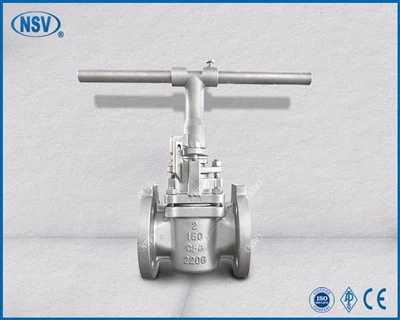
Understanding Control Valve Hysteresis
Before we explore the effects, let’s briefly define what control valve hysteresis is. In simple terms, hysteresis refers to the difference in the valve’s response when it is opening compared to when it is closing for the same input signal. This phenomenon occurs due to several factors, including friction in the valve stem, backlash in the actuator mechanism, and the inherent stiffness of the valve packing.
Impact on Process Control Accuracy
One of the most immediate effects of control valve hysteresis is its impact on process control accuracy. In a typical control loop, the controller sends a signal to the valve to adjust the flow rate, pressure, or temperature of a fluid. However, due to hysteresis, the actual position of the valve may deviate from the desired position, leading to inaccuracies in the process variable being controlled.
For example, in a temperature control system, the controller may send a signal to the valve to increase the flow of hot water to maintain a set temperature. If the valve has significant hysteresis, it may not open as much as required when the signal is first sent, causing the temperature to drop below the set point. Conversely, when the controller sends a signal to close the valve, it may not close fully, leading to overshoot and instability in the process.
This lack of accuracy can result in product quality issues, increased energy consumption, and reduced efficiency. In industries where precise control is critical, such as pharmaceuticals and food processing, even small errors in process variables can have a significant impact on product quality and safety.
Instability and Oscillations
Control valve hysteresis can also lead to instability and oscillations in the control loop. When the valve’s response is inconsistent, the controller may continuously adjust the control signal in an attempt to correct the error, resulting in a cycle of overshoot and undershoot. This can cause the process variable to oscillate around the set point, making it difficult to maintain a stable operating condition.
Oscillations not only reduce the efficiency of the process but can also cause mechanical stress on the valve and other components in the system. Over time, this can lead to premature wear and failure, increasing maintenance costs and downtime.
In some cases, the oscillations may become so severe that they cause the control system to become unstable, leading to a complete shutdown of the process. This can have a significant impact on production schedules and profitability, especially in industries where continuous operation is essential.
Reduced Valve Life
The presence of hysteresis in a control valve can also significantly reduce its service life. The inconsistent forces acting on the valve stem and actuator due to hysteresis can cause excessive wear and tear on these components. Friction in the valve stem and packing, combined with the repeated cycling of the valve, can lead to increased erosion and corrosion, resulting in leakage and reduced performance.
Moreover, the oscillations caused by hysteresis can subject the valve to mechanical vibrations, which can further exacerbate the wear and tear. These vibrations can also cause松动 (loosening) of the valve internals, leading to misalignment and reduced sealing performance.
As the valve deteriorates over time, it becomes more prone to failure, requiring more frequent maintenance and replacement. This not only increases the operating costs but also disrupts the production process, leading to lost productivity and revenue.
Energy Efficiency Loss
Control valve hysteresis can have a significant impact on energy efficiency in industrial processes. When the valve does not respond accurately to the control signal, it may not regulate the flow of fluid as efficiently as possible, resulting in increased energy consumption.
For example, in a pumping system, if the valve has hysteresis, it may not close fully when the flow rate needs to be reduced, causing the pump to work harder than necessary. This can lead to increased power consumption and higher operating costs.
In addition, the instability and oscillations caused by hysteresis can also result in energy losses. The repeated cycling of the valve and the associated fluctuations in the process variable require additional energy to maintain the desired operating condition.
Mitigating the Effects of Control Valve Hysteresis
While control valve hysteresis is an inherent characteristic of most valves, there are several strategies that can be employed to mitigate its effects.
- Proper Valve Selection: Choosing the right valve for the application is crucial. Consider factors such as the valve type, size, and actuator design to minimize hysteresis. For example, rotary valves generally have lower hysteresis compared to linear valves.
- Regular Maintenance: Performing regular maintenance on the control valve is essential to ensure its proper operation. This includes lubricating the valve stem, checking for worn or damaged components, and adjusting the actuator settings.
- Advanced Control Algorithms: Implementing advanced control algorithms can help compensate for valve hysteresis. These algorithms use techniques such as predictive control and adaptive control to adjust the control signal based on the valve’s response characteristics.
- Feedback and Monitoring: Continuous monitoring of the valve’s performance and the process variable can provide valuable insights into the presence and severity of hysteresis. Using feedback from sensors, the control system can be adjusted in real-time to minimize the effects of hysteresis.
Conclusion
In conclusion, control valve hysteresis can have a wide range of effects on industrial processes, including reduced control accuracy, instability, increased valve wear, and energy efficiency losses. As a control valves supplier, I understand the importance of providing high-quality valves that minimize hysteresis and ensure reliable operation.

If you’re experiencing issues related to control valve hysteresis in your process, or if you’re looking to upgrade your existing valves to improve performance, I invite you to contact me. I can provide you with expert advice on valve selection, installation, and maintenance, and help you find the best solution for your specific needs.
Control Valves Let’s work together to optimize your process control and achieve greater efficiency and productivity.
References
- Smith, J. (2018). Industrial Process Control: Principles and Applications. Elsevier.
- Davis, R. (2019). Control Valve Handbook. Fisher – Emerson.
- Johnson, M. (2020). Valve Technology and Applications. Wiley.
NSV Valve Corporation
NSV Valve Corporation is one of the most professional control valves manufacturers and suppliers in China, featured by quality products and good service. Please rest assured to buy control valves made in China here from our factory.
Address: Puyi Road,Sanqiao Industrial Zone, Oubei Street, Yongjia County,Zhejiang,China
E-mail: info@nsvvalve.com
WebSite: https://www.nsvvalves.com/
