What is the Range of a Liquid Level Transmitter? Liquid Level Transmitter
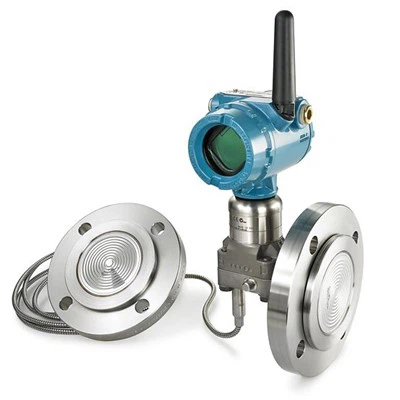
As a liquid level transmitter supplier, I get this question at least a few times a week from folks who’re just starting out with level measurement, or even veteran engineers who’ve run into weird glitches with old setups. “Range” might sound like a basic term, but it’s not just a number you pull off a spec sheet—get it wrong, and your transmitter’ll either miss half the fluid in your tank or trigger false alarms so often your team’ll start ignoring it. Let’s break this down simply, no jargon overload, and cover what actually matters when you’re picking a transmitter that fits your exact needs.
First off, let’s skip the textbook definition for a sec. The range of a liquid level transmitter is just the full span of liquid height the device can accurately measure. It’s not a single number, it’s a window—like if your tank holds 10 meters of water total, a transmitter with a range of 0 to 10 meters would work, but if you only need to track the last 2 meters (like a buffer tank that never drops below 3 meters), a 1 to 5 meter range might be way more precise and cost-effective than a wider one. That’s the big mistake people make: grabbing a transmitter with a range that’s bigger than they need, which winds up costing more upfront and can actually make your readings less accurate.
Wait, let’s clarify another term here: “span” is often mixed up with range, and I see that mix-up all the time. Span is the difference between the top and bottom of your range, right? So if your range is 0 to 8 meters, the span is 8 meters. Range is the whole window, span is how tall that window is. Got it? Cool, let’s move on.
Now, how does the type of liquid level transmitter you use change what range you can expect? Because trust me, a radar transmitter works totally different from an ultrasonic one, which is different from a pressure (hydrostatic) one—each has its own sweet spot for range, and that’s not just random spec sheet fluff.
Hydrostatic level transmitters are super common for industrial tanks, especially for water, oil, or chemicals that are compatible with the diaphragm. These work by measuring the pressure exerted by the liquid above the sensor—more liquid = more pressure, so we convert that to a level reading. Their range is usually from like 0.5 meters up to 100 meters, and sometimes even more if you go with a submersible model for deep tanks. But here’s the catch with hydrostatic units: they only measure the height from the sensor to the liquid surface, so if your tank has slush, foam, or dense sludge, the pressure reading can be off because the foam or sludge adds extra weight without being actual liquid. That means even if your tank is 15 meters deep, a hydrostatic transmitter’s max range of 10 meters might not work if you’ve got thick foam on top—you’d need a different type.
Ultrasonic transmitters are the ones that send a sound wave down, time how long it takes to bounce off the liquid surface, and calculate level that way. These are great for open tanks—like a sewer line, a food processing vat with a vent on top, or a water storage tank that’s not sealed. Their range tops out around 10 meters, usually, and that’s for clear liquids with no foam. If there’s foam, the sound wave gets absorbed, so you’ll get a wrong reading. Also, don’t use ultrasonic for high-temperature environments or places where there’s a lot of dust or steam—those mess with the sound wave too. That’s why you’ll see a lot of outdoor water tanks using ultrasonic with a 3 to 8 meter range, because that’s all they need, and it’s cheaper than other types.
Radar transmitters, specifically non-contact FMCW radar (Frequency Modulated Continuous Wave, don’t let the name scare you), are the workhorses for sealed tanks, especially with viscous, foamy, or hot liquids. These send a microwave signal that bounces off the surface, and they’re way less affected by temp, steam, or foam than ultrasonic. Their range can go from a tiny 0.1 meter up to 70 meters—way bigger than ultrasonic. I’ve had customers use 50 meter range radar transmitters for deep crude oil storage tanks, and they work way better than the old pressure units they had before, which would drift when the oil temp changed. The key here with radar is that even a big range doesn’t mean you can’t use a small part of it. If your tank only needs to track from 2 meters to 10 meters, a radar with a 0 to 20 meter range will still read that 8 meter window super accurately, way better than a radar made for a 0 to 10 meter range. That’s the advantage of radar over older tech—its range is flexible.
Guided Wave Radar (GWR) is another type, similar to non-contact radar but it has a probe that goes down into the liquid. No more bouncing off the surface— the signal travels down the probe, bounces off the liquid, and comes back. That means it works in sealed tanks, even with super hot liquids or high vacuum, and it’s great for liquids with high viscosity, like chocolate or heavy oil. Its range is usually from 0.2 meters up to 30 meters, which covers most industrial process tanks. I’ve got a food processing customer who uses GWR with a 0 to 5 meter range for their chocolate mixing vats—no foam gets in the way because the probe touches the liquid, so readings are spot-on all day.
Now, why does picking the right range matter so much, beyond just accuracy? Let’s talk cost first. If you get a transmitter with a range that’s too big, you’re paying for extra sensor material, extra electronics that you don’t need, and sometimes a bigger housing. For a small 2 meter tank, a 10 meter range transmitter costs 20-30% more than a 0 to 3 meter one. That adds up when you’re buying 10 or 20 units for a facility. Then there’s performance: a transmitter that’s made for a narrow range is way more precise in that window. If you have a 10 meter tank and you use a 0 to 20 meter transmitter, the smallest change in level (like 1 cm) will show up as a tiny blip on the spec sheet, but if you use a 0 to 10 meter one, that same 1 cm change is twice as noticeable. Less drift, fewer false readings. Also, calibration—if your range is too big, you might have to calibrate more often, because the sensor is working outside its ideal sweet spot. I’ve had customers call me saying their transmitter is “broken” when really they just bought a too-wide range unit for their small tank, so it’s always drifting a little.
Wait, what about applications where you need multiple ranges for the same tank? A lot of industrial tanks have a “dead band” at the bottom and top—like a tank that can’t go below 1 meter (because the outlet is there, you don’t want to suck air) and can’t go above 9 meters (because the overflow line is at 9). So you’d set your transmitter’s range to 1 to 9 meters, even if the tank is 10 meters tall. That’s called “damping” or “setting the active range,” right? Not all transmitters let you do that, but most modern ones do. That’s a game-changer—you’re effectively making your transmitter’s span only 8 meters, which is way more accurate than using the full 10 meter tank height. I always tell customers to figure out their actual operating limits, not the total tank height, when setting the range. That’s how you avoid so many headaches.
Another common question: can you adjust the range after you install the transmitter? Most of the time, yes. New transmitters have digital settings, so you can tweak the range via the HMI (human-machine interface) or the app, no need to swap out the sensor. Old analog transmitters can be adjusted too, usually with a couple of screws, but digital ones are way easier. That’s a good thing, because if you change your tank’s use later—like you used to store water and now you’re storing a thinner liquid, or you add a new overflow line—you can just adjust the range instead of buying a whole new unit. I’ve had a chemical plant customer do that last year: they had a 0 to 10 meter range transmitter, but they lowered the overflow line, so they set the range to 0 to 8 meters and it worked perfectly. Saved them thousands in replacement costs.
Now, let’s cover the edge cases, because range isn’t just for standard tanks. What about small tanks, like a 0.5 liter lab beaker? You don’t need a 10 meter transmitter—you need a small, low-range one, like a 0 to 10 cm range ultrasonic or even a capacitive transmitter. What about large tanks, like a 100 meter tall oil storage tank at a port? You’ll need a radar transmitter with a 0 to 100 meter range, but you have to make sure it’s rated for outdoor use, high wind, and heavy steam from the loading process. I supplied a port in Houston with 12 radar transmitters last year, all 0 to 80 meter range, and they’ve been running for 18 months with zero issues.
Wait, what about when people ask “what’s the maximum range I can get?” I tell them it depends on the environment. If you have a completely empty tank, no steam, no foam, a non-contact radar can go up to 70 meters, maybe 80 if it’s a special model. But if there’s steam, the max range drops to around 40 meters, because the steam absorbs the microwave signal. Ultrasonic tops out at 10 meters, usually less if there’s any moisture in the air. Hydrostatic is limited by how deep you can submerge the sensor, but deep tanks have pressure issues too, so hydrostatic over 50 meters is rare.
Let’s talk about mistakes I see all the time, so you can avoid them. First mistake: matching the transmitter’s range to the tank’s total height, not the actual operating level. Like, a customer had a 10 meter tank, but it never goes below 2 meters or above 7 meters, so they used a 0 to 10 meter transmitter and wondered why the readings were all off. They should’ve used a 2 to 7 meter range, which is a smaller span, so more accurate. Second mistake: using the wrong transmitter type for the environment, which limits your range. Like, using ultrasonic in a tank with foam—they’ll get a false low reading every time the foam gets thick. Third mistake: not accounting for temperature changes with hydrostatic transmitters. If your liquid is hot, its density changes, so the pressure reading is off. A good hydrostatic transmitter will let you calibrate for density, but if your range is set too wide, the density error will throw off a bigger part of the reading.
As your liquid level transmitter supplier, I always recommend taking three steps before you pick a range. First, measure your actual tank’s operating limits: the minimum level you can have (so you don’t suck air or dry pump) and the maximum level (so you don’t overflow). That’s your active range, no exceptions. Second, pick the right transmitter type for your liquid, tank type (open vs sealed), and environment. Don’t just go for the cheapest—if you need a 5 meter range for a foamy liquid, a radar is better than ultrasonic, even if it’s a bit more. Third, check that the transmitter can be adjusted to that range. A lot of budget transmitters only have fixed ranges, so if you need a custom 1.5 to 5.5 meter range, make sure the vendor can offer that.
Wait, one last thing: accuracy vs range. People think a bigger range means less accuracy, and that’s mostly true. A transmitter with a 0 to 10 meter range might have an accuracy of ±0.1% of span, so that’s ±1 cm for 10 meters. A transmitter with a 0 to 5 meter range will have an accuracy of ±0.05% of span, so that’s ±0.25 cm for 5 meters. Way more precise. So even if the big range covers your tank, the smaller range will give you way better readings for your money. That’s why I always tell customers to size their range to their actual needs, not the tank’s total height.

If you’re working on a project right now and you’re not sure what range you need, or you’ve had issues with your current transmitter’s range being wrong, feel free to reach out. I can help you figure out the right type and range for your tank, no hard sell—just honest advice based on what works for similar customers. We’ve got transmitters for every type of application, from small lab tanks to 100 meter industrial storage, so we can match whatever you need.
Siemens Pressure Transmitter References
- Level Measurement Handbook, Emerson Process Management, 2022
- “Selection Guide for Liquid Level Transmitters,” Instrumentation and Control Systems Magazine, 2023
- Hydrostatic Level Measurement Principles, Endress+Hauser, 2021
- “Non-Contact Radar Level Transmitters for Industrial Applications,” IEEE Transactions on Industrial Electronics, 2022
Iges Instrument Co., Ltd.
With abundant experience, we are one of the most professional liquid level transmitter suppliers in China. Please feel free to buy high quality liquid level transmitter in stock here and get quotation from our factory. Good service and low price are available.
Address: No. 103, 1st Floor, Dacheng Commercial Building, Chezhan Avenue, Lucheng District, Wenzhou City
E-mail: igesinst@gmail.com
WebSite: https://www.iges-inst.com/
